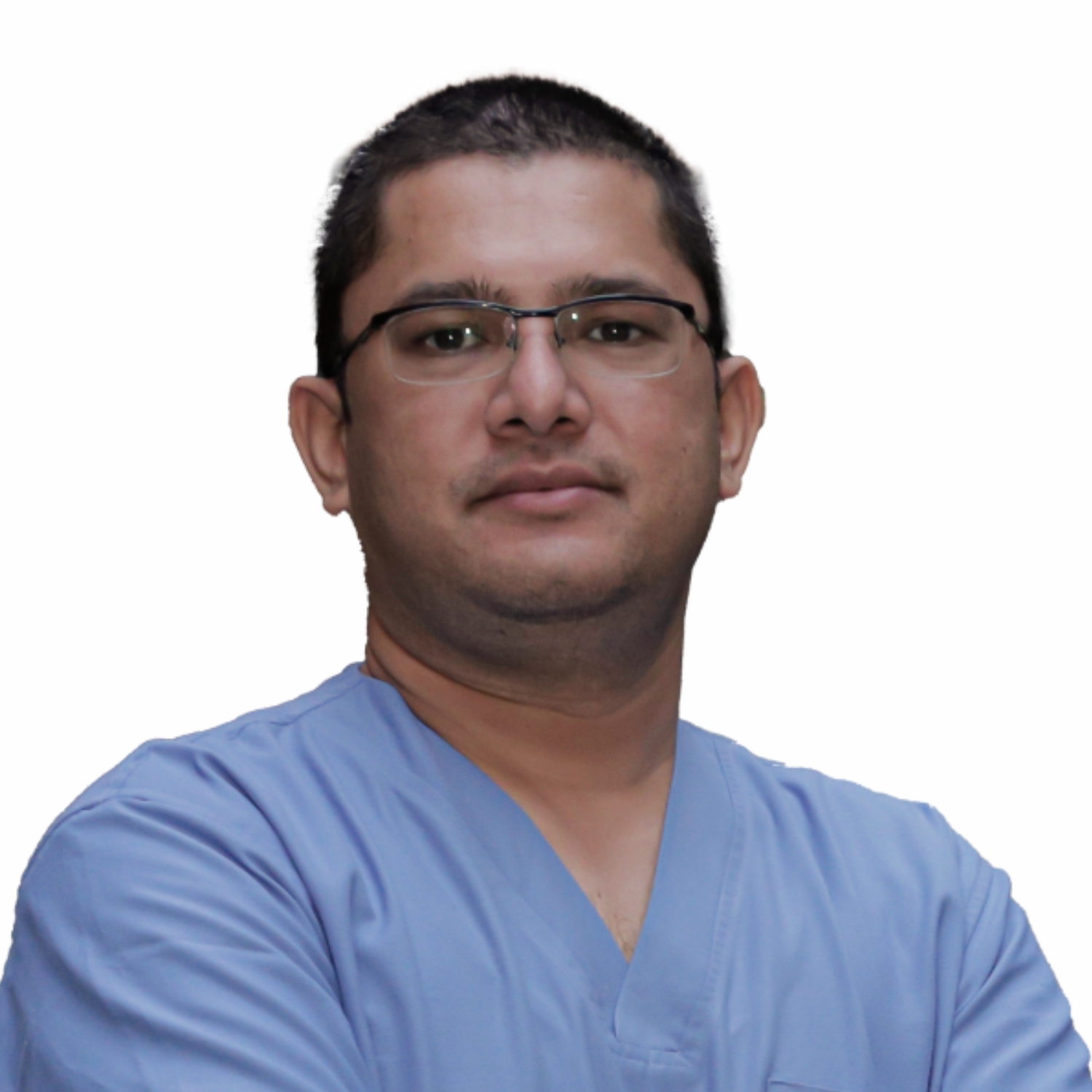
Consultant Dr. Hardik Shah has 16 years of experience in medicine and sees patients at Marengo CIMS Hospital, Ahmedabad. His clinical work covers general internal medicine, diabetes and metabolic disorders, infectious diseases, preventive health check-ups, non-interventional cardiology, and the management of medical emergencies. Alongside patient care, he is an American Heart Association faculty member for BLS and ACLS and a consultant for clinical research, training, and audit. Long-term conditions such as diabetes can feel overwhelming, so he focuses on clear explanations and practical plans that fit into everyday life.
Qualifications
- MBBS, B. J. Medical College, Gujarat University, Ahmedabad (2005)
- MD (Medicine), B. J. Medical College, Gujarat University, Ahmedabad (2009)
- Associate Fellow of Industrial Health (AFIH), approved by DGFASLI, Government of India
- Infectious Disease Certificate Course (IDCC), P. D. Hinduja National Hospital and Medical Research Centre, Mumbai, in collaboration with Henry Ford Health System, Detroit, USA
Areas of Expertise
- Internal Medicine
- Diabetes and Metabolic Disorders
- Infectious Diseases
- Preventive Health Check-ups
- Non-interventional Cardiology
- Medical Emergency Management
- BLS and ACLS Training
- Clinical Research, Medical Monitoring and Audit in Clinical Trials
Professional Memberships and Certifications
- Member, Indian Medical Association (IMA)
- Member, Association of Physicians of Ahmedabad
- Member, Ahmedabad Hospital and Nursing Home Association (AHNA)
- Faculty, BLS, ACLS and Emergency Cardiac Care (ECC), American Heart Association (since 2009)
- Member Secretary, Ethics Committee, Marengo CIMS Hospital
Medical Registration Number
G-16340
Where Internal Medicine Fits in Your Care
Many health problems don't arrive with a clear label. It might be a fever that won't settle, sugar readings that keep creeping up, or tiredness with no obvious reason. An internal medicine physician is trained to look at the adult patient as a whole, diagnose illnesses that affect more than one part of the body, and manage them without surgery. If you are looking for a General Physician in Ahmedabad for diabetes, repeated infections, blood pressure or a general health concern, this is usually the right place to start. When a specialist is needed, your physician helps coordinate that care.
Training and Career
Dr. Hardik Shah completed his MBBS in 2005 and his MD in Medicine in 2009 at B. J. Medical College, Gujarat University, Ahmedabad. From 2009 to 2015, he was Assistant Professor in Medicine and Critical Care at the U. N. Mehta Institute of Cardiology and Research Centre, B. J. Medical College, and from 2016 to 2017, he was Associate Professor in Medicine at GMERS Medical College, Sola, Ahmedabad.
He has completed an Infectious Disease Certificate Course at P. D. Hinduja National Hospital, Mumbai, in collaboration with Henry Ford Health System, USA, and Golden Hour emergency care training at the Academy for Cardiac Excellence, Jayadeva Institute of Cardiology, Bangalore. He has also trained in diabetes, cardiovascular disease and stroke prevention, care and control through a programme run by the India Diabetes Research Foundation, the World Diabetes Foundation and the National Programme for Non-Communicable Diseases, and he took an active part in organising and implementing the Intensified Pulse Polio Immunisation Programme. People searching for the Best Physician Hardik Shah in Ahmedabad will find a doctor whose teaching, training and practice span the full breadth of adult medicine.
Your First Visit
A consultation with Dr. Hardik Shah begins with a conversation about what has brought you in: your symptoms, how long you have had them and what makes them better or worse. Your medical history, family history, medicines, diet, physical activity, sleep, and habits such as smoking or alcohol are reviewed, and you are examined. Depending on the problem, tests such as blood sugar and HbA1c, a complete blood count, kidney and liver function, a lipid profile, a urine test, an ECG or a chest X-ray may be suggested. If you have diabetes, bring your glucose meter or sugar diary along with earlier reports and a list of all your medicines.
Diabetes and Metabolic Disorders: Keeping Sugar in Check
Type 2 diabetes often develops quietly. Some people notice more thirst, frequent urination, tiredness, slow-healing wounds or blurred vision, while many have no symptoms at all and find out from a routine test. Good diabetes care is about more than sugar numbers. It includes blood pressure, cholesterol and weight, along with regular checks of the eyes, kidneys and feet, since that is where long-term complications tend to appear. Treatment may involve changes in diet and activity, tablets, insulin or newer medicines, and the plan is adjusted as your needs change. Related metabolic problems such as high cholesterol, obesity and fatty liver are often managed alongside. Do not stop or change your diabetes medicines on your own, and ask how often your HbA1c should be checked.
Fever and Infections: When to Get Checked
Most fevers settle within a few days. A fever deserves a doctor's review when it lasts more than two or three days, keeps coming back, is very high, or comes with a severe headache, body pain, a rash, bleeding, breathlessness, vomiting, confusion, or reduced urine. Seasonal infections such as dengue, malaria, typhoid and chikungunya are common in Ahmedabad, especially during and after the monsoon, and they can look alike in the first few days. Simple blood tests usually tell them apart. He also treats chest, urinary, skin, and gut infections, and fevers whose cause is not clear at first. Avoid starting antibiotics on your own or reusing an old prescription, since the wrong medicine can hide the real cause and add to antibiotic resistance.
Preventive Health Check-ups
Many conditions, including diabetes, high blood pressure, high cholesterol and early kidney disease, cause no symptoms for years. A preventive health check-up looks for them early, when they are easier to treat. It usually includes a review of your history and lifestyle, an examination, blood and urine tests and an ECG, with further tests chosen according to your age, family history and risk factors. The real value of a check-up lies in what happens next, so ask your doctor to go through the results with you and agree a plan.
Blood Pressure and Heart Risk
Non-interventional cardiology is the part of heart care that does not involve procedures. It covers the diagnosis and long-term management of high blood pressure, high cholesterol and other risk factors, and the evaluation of symptoms such as chest discomfort, breathlessness or palpitations with tests like an ECG, echocardiogram or treadmill test. Many heart attacks and strokes can be prevented by keeping these risk factors well controlled. If tests point to a problem that needs an angiogram or another procedure, you will be referred to a cardiologist.
Medical Emergencies and Life Support Training
Dr. Hardik Shah has a background in medicine and critical care and has been an American Heart Association faculty member for Basic Life Support (BLS), Advanced Cardiac Life Support (ACLS), and Emergency Cardiac Care (ECC) since 2009. He has also completed Golden Hour emergency care training. Basic life support can save a life in the minutes before an ambulance arrives. If someone collapses and is not breathing normally, call for emergency help, begin chest compressions and use an automated external defibrillator (AED) if one is available. Learning CPR on a recognised course is one of the most useful skills a family can have.
Clinical Research and Academic Contributions
Alongside his clinical practice, Dr. Hardik Shah works as a consultant for clinical research, training and audit, pharmacovigilance, and the management of adverse events and serious adverse events (AE/SAE) in clinical trials. He serves as Member Secretary of the Ethics Committee at Marengo CIMS Hospital, which reviews research to protect the rights, safety, and well-being of participants. His academic career includes six years as Assistant Professor in Medicine and Critical Care at the U. N. Mehta Institute of Cardiology and Research Centre and a term as Associate Professor in Medicine at GMERS Medical College, Sola, and he continues to train healthcare professionals in life support.
Teleconsultation
Teleconsultation is available with Dr. Hardik Shah. It can be useful for follow-up visits, reviewing blood reports and sugar readings, discussing long-term medicines, or getting a first opinion before travelling. A video or phone consultation cannot replace an examination when one is needed, and he may ask you to come in person. Please keep your reports, sugar records and medicine list ready before the call.
When Symptoms Cannot Wait
Go to the nearest emergency department straight away for chest pain or pressure, sudden breathlessness, fainting or collapse, sudden weakness or numbness of the face, arm or leg, slurred speech, confusion or a fit. The same applies to a very high fever with drowsiness, a stiff neck or bleeding, severe dehydration, a low blood sugar that does not improve after taking sugar, or a very high sugar with vomiting, drowsiness, or rapid breathing. People who see the Top Physician Hardik Shah in Ahmedabad should still treat emergencies as emergencies and not wait for OPD hours.
Booking an Appointment
To book a consultation with Dr. Hardik Shah at Marengo CIMS Hospital in Ahmedabad, visit during OPD hours from Monday to Saturday, 9:00 AM to 5:00 PM. Please bring your earlier reports, prescriptions, and discharge summaries; your glucose records if you have diabetes; and a list of all the medicines and supplements you take.